A work zone without proper barricades is an accident waiting to happen. Drivers need a clear signal to slow down, change lanes, or stop entirely, and the wrong barricade sends the wrong message or none at all.
Picking the right type matters more than most contractors realize until something goes wrong on site. This piece covers the main barricade types used on road and construction projects, when each one makes sense, and what to check before placing an order.
Work zones sit right next to live traffic, which makes them one of the riskier parts of any road project. A study analyzing highway work zones across Pakistan found that most sites did not follow standard layout practices for safety and speed control measures, leaving both workers and drivers exposed to preventable risk.
Choosing the right barricade for the situation closes a good part of that gap. A barrier too light for a high-speed road offers little real protection, while an oversized barrier on a low-traffic residential street wastes budget and space.
Matching the barricade to the actual conditions on site makes the difference between a safe work zone and a dangerous one.
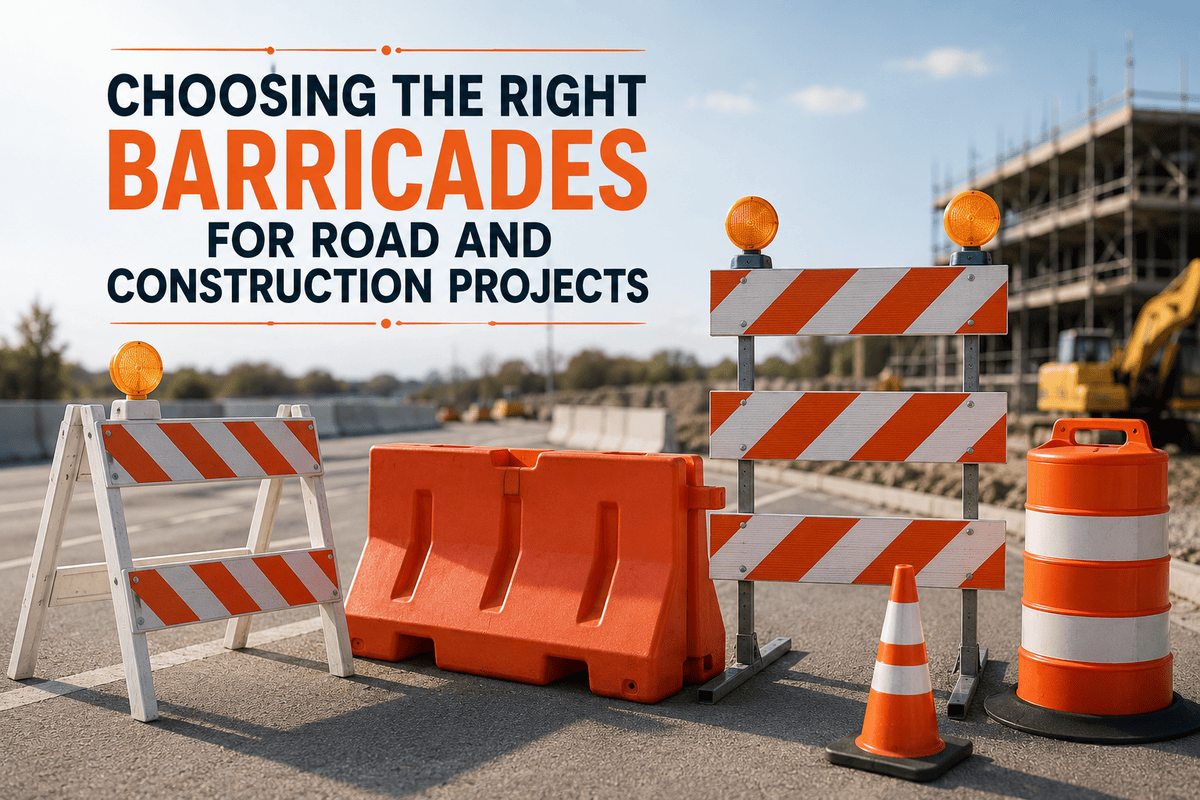
Barricades generally fall into a handful of categories, each suited to a different kind of project.
Portable A-frame and folding barricades work well for short-term jobs, low-speed roads, and situations where crews need to move equipment quickly between sites. They’re easy to transport and set up, though they offer minimal physical protection against a vehicle impact.
These barricades suit pedestrian crossings, event traffic control, and temporary lane closures where the main goal is visibility and guidance rather than crash protection.
Barricades only work if drivers see them early enough to react. Reflective panels attached to a barricade extend visibility well beyond what plain paint or plastic can offer, especially during early morning or nighttime work.
Diamond grade and engineer grade reflective sheeting help these panels stay visible from a much greater distance, giving drivers more time to slow down before reaching the work zone.
For larger construction sites or zones with heavier traffic, interlocking panel barriers create a continuous physical boundary between vehicles and the work area. These barriers connect end to end, forming a solid line that resists being pushed or knocked out of position.
This type suits construction zones running for weeks or months, where a temporary barricade would need constant repositioning and offer far less durability over time. Our heavy-duty safety barrier line is built specifically for this kind of extended, high-traffic use.
Weighted barriers add stability without the permanence of concrete, making them useful for medium-duration projects. Filling them with water or sand increases resistance to wind and vehicle impact while still allowing the barrier to be moved and repositioned when the project layout changes.
Concrete barriers offer the highest level of protection and typically appear on major highway projects, long-term construction zones, or areas with high-speed traffic. Their weight makes them difficult to move, which is exactly the point on projects where a vehicle strike is a real possibility.
A few practical factors determine which barricade type actually fits a given job.
Higher speed roads need barriers with real crash resistance, not just visual warning devices. Lower speed residential streets or parking areas can usually rely on lighter, more portable options.
Short jobs lasting a day or two rarely justify the cost and setup time of heavy interlocking barriers. Longer projects, on the other hand, benefit from the added durability and lower long-term maintenance that sturdier barriers provide.
Night work, low-light conditions, and high-speed roads all call for stronger reflective visibility. Checking the reflective grade of any barricade signage before purchase avoids a costly mismatch between the product and the actual site conditions.
Tight urban work zones often limit how much space is available for barricades, favoring compact, interlocking designs over bulky concrete sections. Open highway projects generally have more room to accommodate larger, heavier barrier types.
Barricades used across multiple projects offer better long-term value than single-use options, especially for contractors managing several sites throughout the year. Durable materials cost more upfront but typically last through many more projects before needing replacement.
A few recurring mistakes show up across many work zones, and most are easy to avoid with a bit of planning.
Using undersized barricades on high-speed roads leaves drivers with too little warning and too little physical protection. Skipping reflective elements entirely creates a serious visibility gap during early morning or nighttime work. Spacing barricades too far apart along a work zone perimeter can leave gaps large enough for vehicles or pedestrians to slip through unintentionally.
Our guide on durable traffic cones for highways and construction covers a related issue worth checking alongside barricade placement, since cones and barricades often work together to channel traffic safely through a work zone.
Barricades rarely work alone on a well-managed site. Traffic cones handle lane tapering and gradual redirection ahead of the main barrier line, while road studs mark lane edges and crossing points that stay visible even after paint fades.
A broader breakdown of how these tools fit together is mentioned in our comprehensive guide to “choosing the right road safety equipment for your project”, which covers signage, cones, and barriers as a combined system rather than separate purchases.
Choosing the right barricade comes down to matching the equipment to real site conditions, traffic speed, project length, and visibility needs, rather than defaulting to whatever is cheapest or most available. A well-planned barrier system protects workers, guides drivers, and keeps a project running without unnecessary risk.
Need certified barricades and safety equipment for an upcoming project? Request a bulk quote from Reliable Road Safety and get durable, ready-to-ship products for road and construction sites across Pakistan.
Spacing depends on road speed and zone length, but barricades should sit close enough together that no meaningful gap exists for vehicles or pedestrians to pass through unintentionally.
Generally not recommended for high-speed sections. Highways call for barriers with stronger physical resistance, since lightweight options offer little protection against vehicle impact.
Yes, since weather conditions, dust, and low-light hours can reduce visibility even during the day, and reflective panels provide a consistent visibility buffer regardless of conditions.
Well-built interlocking barriers, made from durable plastic or composite material, generally hold up for years of repeated use across multiple projects with proper storage and care.
For a single short project, renting can reduce upfront cost, though contractors managing multiple sites throughout the year typically find owning durable barricades more cost-effective over time.
Speak with our Karachi-based team about your project’s requirements.